
History
Where it all started.
Historical Background
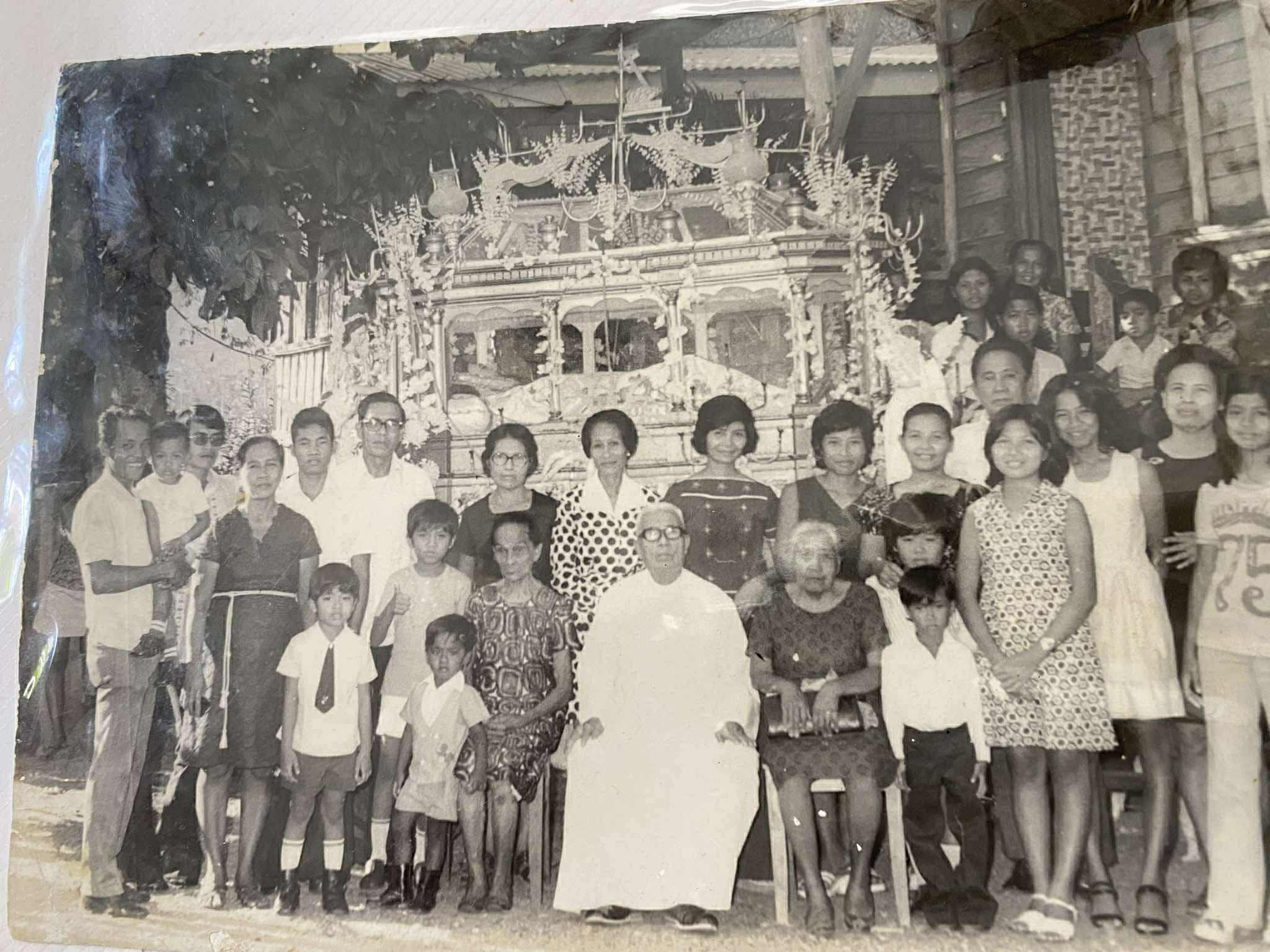
PROVENANCE AND HISTORICAL CONTEXT
Santo Entierro -- This is a sacred image depicting the lifeless body of Christ. It holds profound historical and familial significance for the people of Virac, Catanduanes. This revered image was commissioned by the late spouses AMBROSIO TABLIZO and INES LEONARDO, devout Catholics and respected members of the community. They were blessed with five children: SEVERO, ANDRES, FELIX, MARIA and JUANA. Inspired by their deep faith and the enduring traditions of Holy Week introduced during the Spanish colonial period, Ambrosio and Ines envisioned the Santo Entierro not only as an object of veneration but as a unifying symbol for their family. Their intention was to create a spiritual heirloom — one that would serve as a compelling reason for their children and future generations to return home to Virac every Semana Santa (Holy Week), regardless of where life had taken them. Years passed and the children got married except Andres who became a priest. The firstborn, SEVERO, was married to CARMEN ARCILLA with seven (7) offsprings. The second child, FR. ANDRES unexpectedly had five (5) offsprings while the third child, FELIX was married to RUFINA ACHAVAL with five (5) offspring. The fourth child, MARIA was married to EUSEBIO TALION with eleven (11) offsprings while the youngest, JUANA, was married to ARSENIO TEVES were childless.
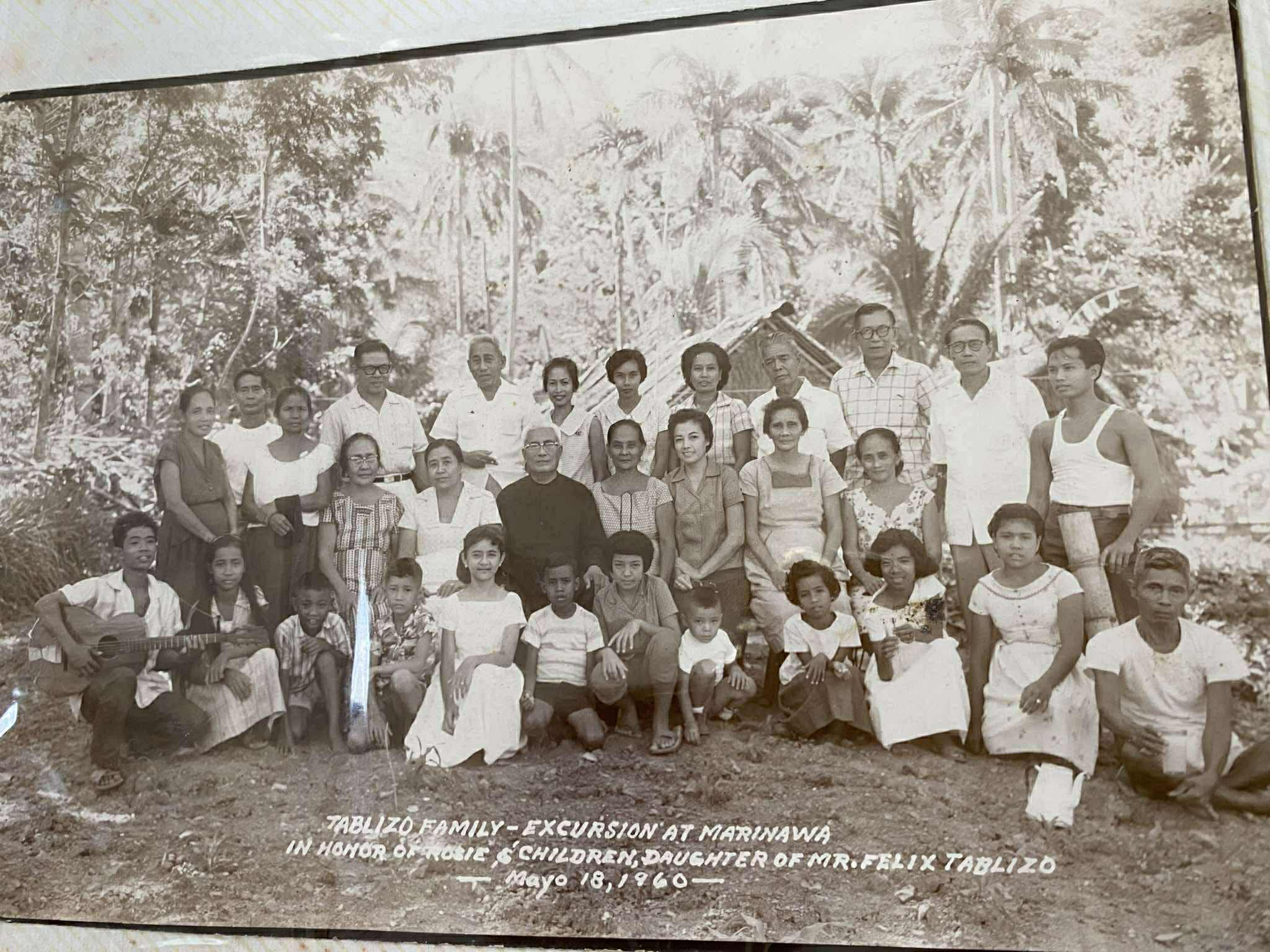
SIGNIFICANCE OF THE HOLY IMAGE TO THE TABLIZO FAMILY
The holy image has long served as the unifying symbol for the Tablizo siblings, honoring the wishes of their parents who instructed them to take turns hosting the family’s Holy Week observance. Over the decades, this tradition has strengthened their bond and sense of duty. The Santo Entierro has become more than just a sacred image—it is a revered centerpiece of the Good Friday procession in Virac, solemnly carried through the streets as part of the town’s deeply rooted Lenten traditions. It stands as a living legacy of faith, family unity, and cultural identity, passed down through generations.
THE ORIGINAL HOME OF THE HOLY IMAGE
According to the Book of the Virac Cathedral, records indicate that during a pastoral visit in
1817, the Bishop of Nueva Caceres was notably impressed by the Church of Virac. The parish
then presided over numerous ermitas (chapels) situated both within the poblacion and in the
outlying areas. These community chapels, built primarily in the last quarter of the 19th century
and into the early American period, were often mistaken for parish churches due to their
substantial size and durable stone construction. Notable examples of these still stand in the
barangays of Gogon, Rawis, and Sta. Elena. (The Virac Cathedral, pp. 24–25).
From this historical context, it is reasonable to deduce that the revered image of the Santo
Entierro was acquired by the devout couple Ambrosio Tablizo and Ines Leonardo during this
flourishing period of religious devotion — estimated to be not less than 160 years ago. At that
time, the couple resided in Barangay San Pedro, in a house that now belongs to the heirs of
their son, Severo Tablizo. Remarkably, this original ancestral home still stands today, a silent
witness to the family’s enduring faith and devotion. Behind the house, the couple built a small
shrine or shelter known as a camarin, where the Santo Entierro was reverently enshrined and
safeguarded. In or around the year 1927, a mysterious incident occurred: for three consecutive
nights, the windows of the camarin were found open — an unsettling occurrence interpreted
by the family as a bad omen. In response, the image was promptly relocated to the residence
of a relative of Ines Leonardo in Barangay Gogon. The following night, a fire of unknown
origin consumed the camarin. Remarkably, the Santo Entierro had already been transferred
and was spared from the blaze — an event widely regarded as miraculous. Instead of
reconstructing the destroyed camarin, the family chose to house the image in a large wooden
box, which was then placed at the St. Raphael Chapel in Gogon. It remained there even
through the Japanese occupation during World War II. In later years, however, parishioners
began to express concern that the box obscured the sacred presence of the image and was
visually unappealing.
In response, a Memorandum of Agreement was entered into between the Bishop of Virac and
the Caretaker of the St. Raphael Chapel, on one side, and the heirs of Ambrosio Tablizo and
Ines Leonardo, on the other. This agreement formally authorized the image’s public display
at the chapel, allowing for its continued veneration by the faithful. In time, the sacred
responsibility of caring for the Santo Entierro was passed down to Juanito A. Tablizo, the
youngest son of Severo and a third-generation descendant. He faithfully carried out this duty
until his passing. The role was then entrusted to his grandnephew, Rodolfo Kim Arevalo
Chiong, a fifth-generation descendant. Today, he continues this sacred family tradition. Each
Holy Week, he solemnly retrieves the image from the St. Raphael Chapel on Holy Tuesday,
ensures its preparation and presence for the Good Friday procession, and returns it with
reverence to the chapel on Black Saturday.
THE WRITTEN AGREEMENT OF THE FIVE (5) CHILDREN OF AMBROSIO TABLIZO & INES LEONARDO
A written agreement, composed in the Bicol language, exists among the five children of Ambrosio and Ines Tablizo. This document affirms that only the direct heirs and descendants of Severo, Andres, Felix, and Maria shall hold the exclusive right and privilege to take part in the traditional hosting of the Holy Week event during Semana Santa. It is clearly stipulated that their youngest sister, Juana, who remained childless, and consequently has no heirs, shall not be included in the rotation. This agreement, rooted in mutual respect and commitment to their parents’ wishes, continues to serve as a guiding principle for the family’s enduring Lenten tradition.
BIRTH OF THE FOUNDATION
Today, members of the fourth generations continue to honor the original purpose of the image. It remains not only a vessel of devotion but a reminder of the love, foresight, and values of Ambrosio and Ines — ensuring that each Holy Week becomes a moment of reunion, reflection, and renewal for the Tablizo-Leonardo family and their descendants. For several decades, the family envisioned formalizing their association of descendants representing the heirs of the four siblings with offspring. Although drafts of the constitution and by-laws had been prepared, these efforts were not realized until July 2023. Through Facebook Messenger, representatives from the four siblings (excluding the childless daughter - Juana), organized and elected officers, leading to the establishment of the Santo Entierro de Virac Foundation, Inc., which was subsequently registered with the Securities and Exchange Commission
DISCLAIMER: The historical background presented in this document is based on oral narratives, personal accounts and some available documents shared by members of the third generation of the Tablizo family during their lifetime. It also draws from the collective memory and knowledge of the fourth generation, as passed down to them by their elders. While every effort has been made to preserve the accuracy and integrity of these accounts, this compilation remains a work in progress. Ongoing research continues to verify and enrich the narrative with additional facts and historical details as they become available. This document is therefore intended as a living record—open to refinement as the family’s story continues to unfold and as new information is discovered.